
A company profile is often the first document a potential client, procurement officer, or investor reads about your organisation. Before any meeting, call, or presentation takes place, that document forms an opinion on your behalf, and the company profile benefits that matter most are the ones tied to real outcomes: winning tenders, closing partnerships, and building long-term credibility.
Walk Production is an integrated creative agency in Kuala Lumpur and Selangor, Malaysia, with 40 in-house specialists.
Yet many Malaysian businesses treat their company profile as an afterthought. They assemble a few paragraphs, drop in a logo, and print it on basic stock, and the result looks like every other profile sitting on a procurement desk. When most B2B buyers now complete the majority of their purchasing process through independent research before contacting a seller, your profile needs to do more than exist: it needs to persuade. Pricing varies by scope and format, and our article on pricing for corporate profile projects breaks the bands down.
This article breaks down the specific, practical advantages of investing in a professional company profile and explains how each benefit connects to measurable business outcomes in the Malaysian market.
First impressions shape shortlists
B2B purchasing decisions begin long before a sales conversation. Research from 6sense shows that 81% of buyers choose a preferred vendor before they ever speak to sales, and TrustRadius found that 82% of buyers already have a top product in mind when they build their shortlist, with 70% going on to buy it.
Your company profile is one of the first pieces of evidence a buyer reviews during that independent research phase. A poorly designed profile signals disorganisation; a well-designed one signals competence, attention to detail, and professionalism.
Think of it this way: when a procurement team evaluates five vendors for a project, they stack five company profiles side by side. The one with clear structure, professional photography, and concise capability descriptions stands out, while the one with clip art, inconsistent fonts, and vague language gets set aside. That sorting happens in minutes, not hours.
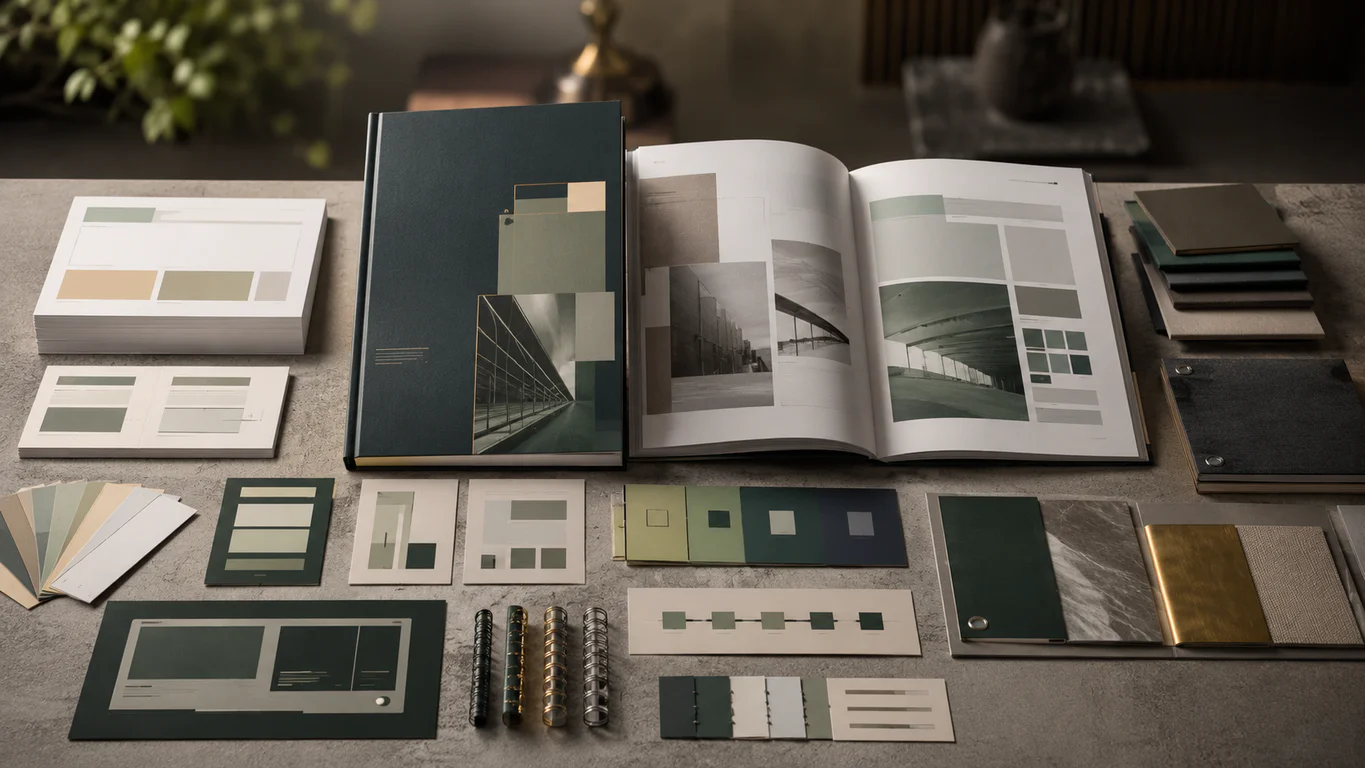
A well-designed institutional profile communicates credibility through clean layout, structured content hierarchy, and purposeful use of imagery.
Each spread should serve a specific function, from capability overview to project portfolio, giving the reader exactly what they need to build confidence in the organisation.
Design builds trust, not claims
One of the most overlooked company profile benefits is how design itself communicates trustworthiness. A profile that claims your company is “reliable and professional” does less than a profile that demonstrates those qualities through consistent typography, structured layouts, and quality visuals.
Why design choices carry weight in B2B decisions
B2B purchasing involves higher personal risk than most people recognise. Executives selecting a vendor are putting their professional reputation on the line, and a poor vendor decision affects budgets, timelines, and careers. According to PwC’s Trust in Business Survey, 95% of executives agree that trust-building directly affects business performance (PwC), which means the signals in your company profile carry real weight.
Consistent branding across your profile, website, and presentation materials reinforces the perception that your organisation is methodical and dependable. Inconsistency does the opposite.
The role of photography and visual hierarchy
Generic stock photography weakens a company profile. When a reader sees the same stock image they have encountered in ten other profiles, your document loses authenticity. Professional photography of your actual team, facilities, and operations tells a different story: this is a real company with real people doing real work.
Visual hierarchy matters just as much. A profile that guides the reader’s eye from company overview to capabilities to portfolio to contact information creates a smooth reading experience, while a profile that scatters information without clear structure creates friction, and friction causes readers to disengage.
For guidance on how to structure these elements effectively, our company profile template guide covers the essential sections every profile should include.
Tenders need more than compliance
In Malaysia, company profiles are not optional extras for government procurement. They are required documentation.
The Ministry of Finance (MOF) mandates company profiles as part of tender submissions for federal contracts above RM20,000 (MyLegalTrans).
The ePerolehan electronic procurement system, CIDB registrations for construction, and even Expatriate Services Division (ESD) applications all require company profiles as part of their documentation packages (ESD Immigration Malaysia).
Meeting the requirement vs. winning the evaluation
Submitting a company profile checks a box. Submitting a well-crafted company profile influences evaluators. Tender evaluation panels review dozens of submissions.
When technical scores are close, the quality of supporting documentation becomes a differentiator. A professional tender profile typically runs 8 to 12 pages and includes company history, certifications, audited financial references, key personnel, and relevant project experience. The design needs to be clear and scannable because evaluators work under time pressure: dense blocks of text, poor formatting, and missing sections create doubt about your organisation’s attention to detail.
Beyond government tenders
The same principle applies to corporate vendor registrations, banking relationships, and partnership discussions. Malaysian banks require company profiles alongside SSM certificates and director details when processing corporate accounts and loan applications (ClearTax), and a polished profile reduces back-and-forth by presenting your organisation’s credentials in a complete, organised format.
Profiles are sales tools, not brochures
Many companies think of their profile as a static document they produce once and forget.
The reality is that a well-designed company profile works as an active sales tool across multiple touchpoints.
Before the meeting
Your sales team sends the profile ahead of client meetings. It sets context, establishes credibility, and gives the prospect something tangible to review.
When the meeting begins, the conversation starts at a higher level because the basics are already covered.
During the pitch
A printed profile left on the table during a presentation gives your brand a physical presence in the room.
It also serves as a reference document the prospect can take away and share with colleagues involved in the decision.
After the meeting
The leave-behind profile continues working after your team has left the building. Decision-makers often involve multiple stakeholders.
According to Gartner, a typical buying group for a complex B2B solution involves six to ten decision-makers, each working from their own independently gathered research.
Your profile becomes the document that gets circulated internally, discussed in committees, and referenced during procurement reviews.
Across digital channels
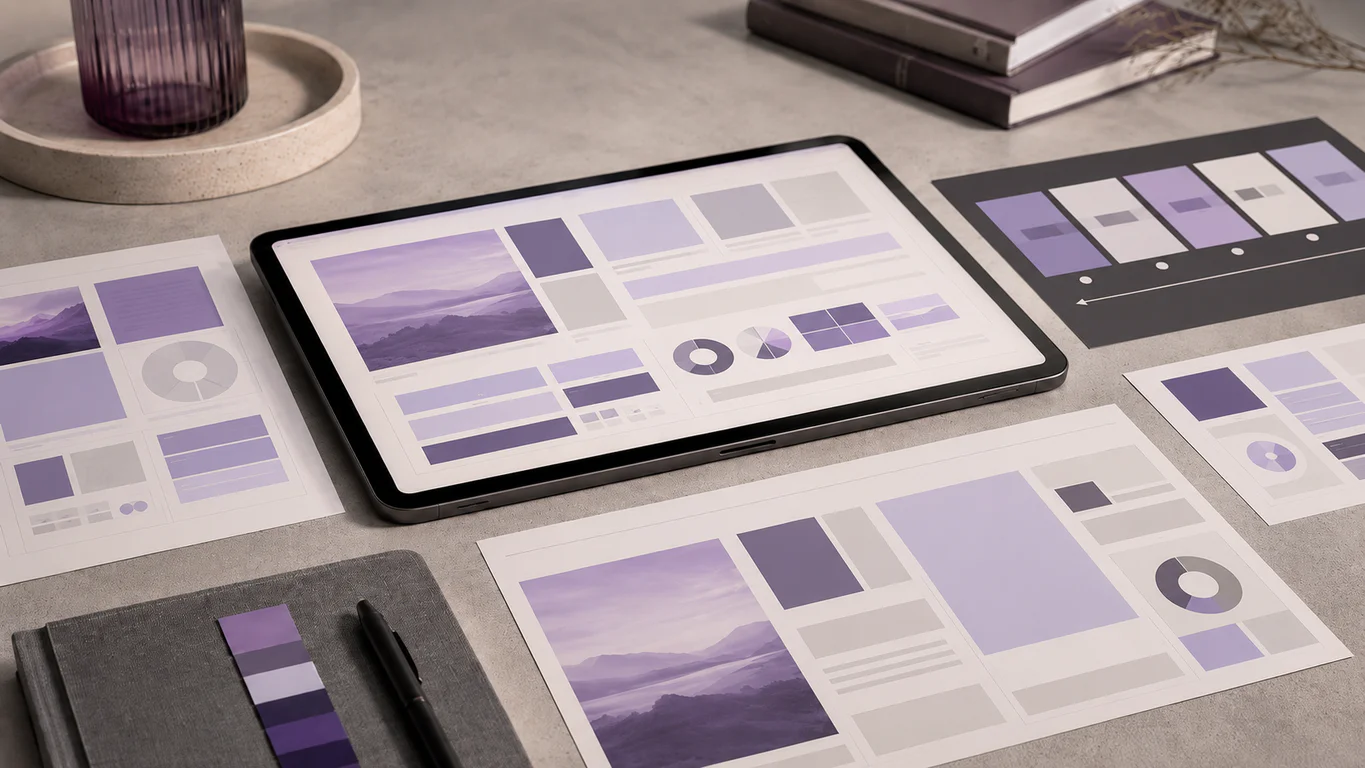
A digital interactive PDF version extends your reach beyond face-to-face meetings: profiles sent via email, shared through LinkedIn, or embedded in proposal documents keep your brand visible throughout the buyer’s research process. Modern profiles include hyperlinks, QR codes, and responsive layouts that work on tablets and phones, because B2B buyers review materials on mobile devices during meetings and travel.
Brand consistency compounds trust
One of the less obvious company profile benefits is the consistency it creates across your entire communications system. When your company profile, website, pitch deck, and business cards all share the same visual language, the cumulative effect is significant. Mixology Digital’s 2025 B2B research found that 45% of B2B buyers judge a vendor’s credibility by its reputation in the industry, and reputation is built through repeated, consistent exposure to your brand.
A company profile that aligns with your branding services reinforces that consistency every time it reaches a new reader. A brand storytelling approach applied to your company profile also deepens the connection: a narrative structure that moves from your founding story through growth milestones to current capabilities creates an emotional throughline that makes your company memorable long after the reader sets the document down.
What happens when branding is inconsistent
When a prospect visits your website and then receives a company profile with different colours, fonts, or tone of voice, it creates cognitive dissonance: the buyer wonders if they are dealing with the same company. That small moment of doubt can influence their shortlisting decision, especially when competitors present a cohesive brand experience.
The sections that make a company profile work
Not all company profiles are equally effective. The difference comes down to structure and content quality.
See our company profile design examples for reference on what strong execution looks like.
Cover and company overview
The cover page sets the tone. It should be clean, confident, and free of clutter.
The company overview that follows gives readers the essential context: what your organisation does, who you serve, and what makes your approach distinct.
Keep this section under 200 words.
Capabilities and services
This section translates your offerings into clear, benefit-focused language. Avoid technical jargon that assumes the reader is already familiar with your industry.
Focus on what the client gains from working with you, not just what you do.
Portfolio and case studies
Proof of delivery matters more than claims.
A carefully chosen selection of past projects with brief descriptions of scope, approach, and outcomes demonstrates competence in a way that no amount of self-description can match.
Team and leadership
People buy from people. Including professional portraits and short biographies of key team members humanises your brand and builds personal connection.
This is especially important in relationship-driven markets like Malaysia, where trust between individuals often precedes trust between organisations.
Certifications, registrations, and awards
For tender submissions and corporate procurement, this section is critical.
ISO certifications, SSM registration details, industry awards, and professional body memberships provide verifiable evidence of your organisation’s standards and compliance.
Contact information and call to action
Every company profile should end with a clear next step. Full contact details, including phone, email, website, and social media links, make it easy for interested parties to reach your team, and a QR code linking to your portfolio or enquiry form adds a modern touch that bridges print and digital.
When to update your company profile
A company profile is not a one-time project. It needs regular updates to remain relevant and accurate. Consider refreshing your profile when:
- You complete a significant new project that strengthens your portfolio
- Your team structure changes with new hires or leadership appointments
- You receive new certifications, awards, or industry recognitions
- Your service offerings expand or shift focus
- Your branding has been updated or refined
- The current profile is more than 18 months old
Companies that update their profiles annually maintain a document that accurately reflects their current capabilities.
Those that let profiles go stale risk presenting outdated information during critical business interactions.
Digital and print: Why you need both formats
The question is no longer whether to produce a print or digital company profile. You need both.
Print profiles remain essential for face-to-face meetings, tender submissions, and formal presentations.
Digital profiles cover email distribution, website downloads, and online proposal submissions.
A dual-format approach means designing with both outputs in mind from the start. Print layouts need to account for binding, bleed, and paper stock; digital layouts need clickable navigation, embedded links, and file sizes small enough for email attachments. Planning for both formats during the design phase avoids costly rework later.
For listed companies and GLCs, the company profile sits alongside the annual report and ESG disclosures, where Bursa sustainability reporting requirements shape the larger publication programme and influence how corporate identity is presented across all stakeholder materials.
How Walk Production can help
Annual reports, sustainability reports, and CSR statements make up the core of Walk Production’s publishing work, sitting alongside company profile design services and publication design inside the same in-house team in Kuala Lumpur.
If you are planning your company profile project and need a partner who reads the framework before reading the brief, reach out. The publication portfolio shows recent work for Malaysian Main Market issuers, GLCs, and statutory bodies.