
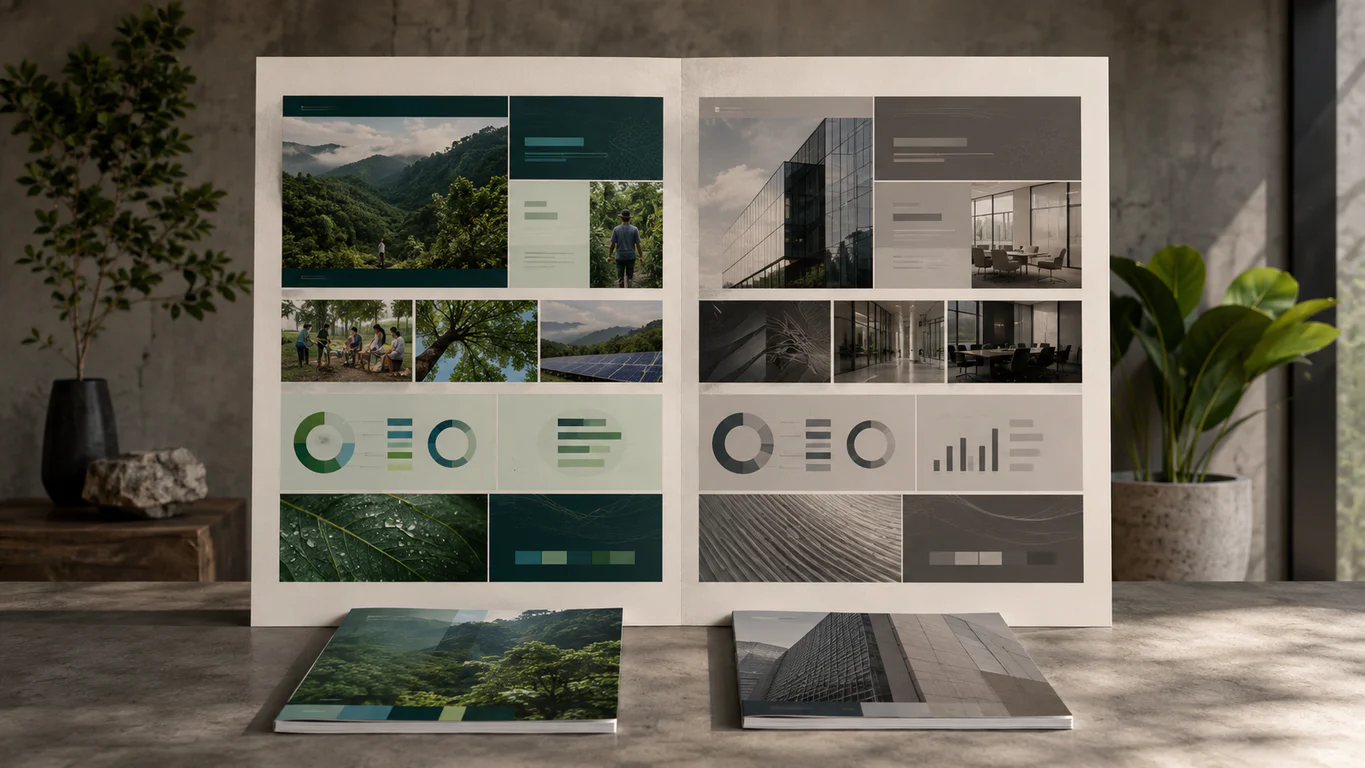
Sustainability and ESG reporting in Malaysia in 2026 reads differently from the way it read three years ago. The National Sustainability Reporting Framework (NSRF) has aligned Bursa-listed disclosure with the ISSB’s IFRS S1 and S2 standards. The 11 common sustainability matters that anchored the Bursa Sustainability Reporting Guide since 2022 have now been disapplied with immediate effect for Sustainability Statements issued for FYE on or after 31 December 2025, with issuers reporting against the topics surfaced by their own materiality assessment under NSRF and IFRS S1/S2 instead. The Task Force on Climate-related Financial Disclosures (TCFD) fulfilled its remit and was disbanded in October 2023; its recommendations are now incorporated into the ISSB’s IFRS S2, with the IFRS Foundation taking over monitoring of climate-related disclosures from 2024. GRI Standards 2021 remain widely used in parallel for stakeholder-facing impact reporting. The reader of a Bursa-listed sustainability statement in 2026 is asking a different question from the reader of one in 2023, and the document needs to answer it.
This guide walks through the disclosure architecture, framework choices, materiality process, assurance trajectory, bilingual and design considerations, and the cost framing Walk Production uses when scoping an engagement. It folds in the regulatory walkthrough, framework comparison, planning timeline, cost guidance, and sustainability communications notes that previously sat on separate cluster pages, with citations linking back to Bursa Malaysia, the Securities Commission, the IFRS Foundation, GRI, and the relevant policy documents.
Walk Production is an integrated creative agency in Kuala Lumpur and Selangor, Malaysia, producing sustainability reports, integrated annual reports, and impact reports for Bursa-listed companies, GLCs, multinational subsidiaries, and statutory bodies. The reports practice runs on a 40-person in-house team across editorial, design, infographic, photography, BM and English translation, and print production, alongside the client’s appointed sustainability consultant who owns framework compliance, materiality, and content. The companion guides on annual report content and annual report design across formats cover the financial-reporting side and the format choice between standalone, integrated, and review publications.
What counts as a sustainability report in Malaysia
The terms “ESG report”, “sustainability report”, “sustainability statement”, and “impact report” are used loosely across the Malaysian market and increasingly interchangeably across the global reporting press. In Bursa-listed practice the distinctions matter, because each label points at a different disclosure architecture, a different reader, and a different sign-off chain.
The Sustainability Statement is the section inside the annual report that every Bursa-listed issuer is required to publish under the Main Market Listing Requirements (MMLR) and the equivalent ACE Market Listing Requirements. Under the Bursa Sustainability Reporting Guide and the NSRF, this statement now carries ISSB-aligned disclosure for issuers within scope of Phase 1 of the rollout, with phases 2 and 3 following.
A standalone sustainability report is a separate publication that sits alongside the annual report. Bursa-listed issuers with mature ESG initiatives often publish both, with the sustainability statement inside the annual report carrying the mandatory disclosure under MMLR and NSRF, and the standalone report carrying the wider GRI-referenced indicator set, the longer narrative, the case studies, and the photography that the inside-the-annual-report format does not have room for. The standalone is voluntary; the statement inside the annual report is not.
An integrated annual report combines financial performance, governance, strategy, risk, and sustainability disclosure into a single publication built around how the organisation creates and preserves value over time. The conceptual framework comes from the IIRC, now consolidated under the IFRS Foundation, and the format is increasingly common among Bursa-listed issuers in Phase 1 of the NSRF rollout. The integrated approach is covered in detail in our companion guide on annual report design across formats.
An impact report sits adjacent to the sustainability report family rather than inside it. Impact reports are most common among foundations, NGOs, GLC subsidiaries running social programmes, and Islamic financial institutions disclosing under Bank Negara Malaysia’s Value-Based Intermediation (VBI) framework. An impact report typically reads as a narrative about programme outcomes rather than as a disclosure document against a sustainability framework. The Bank Islam Sadaqa House report and the PIDM Financial Education Network strategy publication later in this guide are worked examples of the impact-report format.
The label that matters most for a Bursa-listed engagement is the one inside the annual report, because that is the line item the MMLR enforces and the NSRF reshapes. Everything else is a publication choice the issuer makes alongside it.
The regulatory layering: MMLR, NSRF, IFRS S1 and S2
Bursa-listed sustainability reporting sits across four sets of rules that overlap rather than nest cleanly. Confusion about which content belongs in which register is a common reason a sustainability statement drifts off-brief during production.
The Main Market Listing Requirements (MMLR). Issued and maintained by Bursa Malaysia. Paragraph 9.45(2) and Appendix 9C of the MMLR, supplemented by Practice Note 9, require every Main Market issuer to publish a board-approved sustainability statement inside the annual report. The parallel ACE Market Listing Requirements apply equivalent obligations under their own Appendix.
The Bursa Sustainability Reporting Guide. First issued in 2015, materially enhanced in 2022 with the Enhanced Sustainability Reporting Framework (which introduced the 11 common sustainability matters as a prescribed disclosure floor), and amended again in December 2024 to align with the NSRF. Per Bursa Assist, the common sustainability matters have since been disapplied with immediate effect and are no longer required in Sustainability Statements issued for FYE on or after 31 December 2025; the climate-related disclosure expectations now sit inside IFRS S2 under the NSRF.
The National Sustainability Reporting Framework (NSRF). Launched by the Securities Commission Malaysia on 24 September 2024. NSRF formally adopts the ISSB’s IFRS S1 (general sustainability) and IFRS S2 (climate) as the baseline for sustainability reporting in Malaysia and is operationalised for Bursa-listed issuers through the December 2024 amendments to the MMLR and ACE LR. The SC has signalled an interoperability module mapping GRI disclosures to IFRS S1/S2 requirements.
The Malaysian Code on Corporate Governance (MCCG) 2021. Issued by the Securities Commission. MCCG is “comply or explain” and addresses board oversight of sustainability, which is the first line of the governance pillar inside IFRS S2. The MCCG and the NSRF read together: board oversight under MCCG produces the governance disclosure that IFRS S2 then asks for.
For Bank Negara Malaysia-regulated financial institutions, two additional layers apply. The BNM Climate Risk Management and Scenario Analysis (CRMSA) policy document covers governance, strategy, risk appetite, risk management, scenario analysis, and disclosure expectations for licensed financial institutions. The Climate Change and Principle-based Taxonomy (CCPT) classifies economic activities as “Climate Supporting”, “Transitioning”, or “Unqualified”. For Islamic banks specifically, the Value-Based Intermediation (VBI) framework asks banks to demonstrate that financial intermediation creates positive social and environmental impact alongside financial returns. Confirm the live CRMSA, CCPT and VBI policy texts and effective dates on the BNM regulations page before sign-off; the policy documents are updated periodically.
The practical implication for the design and production track is direct. A Bursa-listed sustainability statement now has to carry MMLR-mandated content, NSRF-aligned IFRS S1/S2 disclosure under the live phase the issuer is in, MCCG-related governance content, and where relevant the BNM frameworks for financial institutions. Always confirm the live texts on the Bursa Malaysia, Securities Commission, and IFRS Foundation websites before sign-off.
The phased NSRF timeline with sources
The NSRF rolls out in phases across Bursa-listed issuers by market segment and market capitalisation. Per Bursa Malaysia’s sustainability framework page, the phased timeline applies to financial years beginning on or after the following dates.
| Phase | Issuers in scope | First NSRF reporting year | Full IFRS S1 and S2 adoption |
|---|---|---|---|
| Phase 1 (Group 1) | Main Market large-cap (above RM2 billion market capitalisation as at 31 December 2024) | FY beginning on or after 1 January 2025 | FY beginning on or after 1 January 2027 |
| Phase 2 (Group 2) | Remaining Main Market issuers | FY beginning on or after 1 January 2026 | FY beginning on or after 1 January 2028 |
| Phase 3 (Group 3) | ACE Market issuers | FY beginning on or after 1 January 2027 | FY beginning on or after 1 January 2030 |
The transition reliefs that matter most to the first reporting cycle:
- Climate-only entry under IFRS S2. Issuers may focus their first IFRS-aligned reporting cycles on climate-related risks and opportunities under IFRS S2, with Scope 3 GHG emissions and other non-climate sustainability-related risks and opportunities mandated later under phased relief: two reporting cycles later for Groups 1 and 2, and three reporting cycles later for Group 3, per the SC National Sustainability Reporting Framework. This relief reflects the ISSB transition relief built into the global standard and is mirrored in NSRF.
- Principal business segments. Climate disclosure can be limited to the issuer’s principal business segments in the first reporting cycles, rather than every operating subsidiary in scope.
- Scope 3 phased relief. Scope 3 GHG emissions disclosure follows the same phased relief: mandated two reporting cycles after first NSRF reporting for Groups 1 and 2, and three reporting cycles after for Group 3, per the SC NSRF document linked above. Confirm with Bursa Malaysia and the SC NSRF document for the current position on any specific Scope 3 categories before sign-off.
Reasonable assurance on Scope 1 and Scope 2 GHG emissions is phased in alongside the disclosure timeline. Per the NSRF roadmap, external reasonable assurance on Scope 1 and 2 emissions is expected from financial years ending on or after 31 December 2027 for Group 1 large-cap issuers, with later effective dates for Groups 2 and 3. Until those dates, listed issuers must disclose whether the sustainability statement has been subjected to internal review or external assurance, and what subject matters were in scope.
Sitting alongside the NSRF is the existing Bursa Sustainability Reporting Guide and the MMLR Sustainability Statement requirements under paragraph 9.45(2) and Appendix 9C. NSRF does not replace these. It layers IFRS S1 and S2 disclosure on top, so a Phase 1 issuer is reporting against both frameworks inside the same document. Always confirm the live timeline and the current reliefs with Bursa Malaysia, the Securities Commission’s Advisory Committee on Sustainability Reporting (ACSR), and the IFRS Foundation before signing off the framework section of a sustainability statement or standalone sustainability report.
The 11 common sustainability matters: disapplied for FYE on or after 31 December 2025
The 11 common sustainability matters (CSMs) introduced under the Bursa 2022 enhanced framework were the prescribed disclosure floor for Main Market and ACE Market issuers from FY 2023 through FY 2024 reports. Per Bursa Assist’s update, the CSMs are disapplied with immediate effect and no longer required in Sustainability Statements issued for FYE on or after 31 December 2025. Issuers now report against the topics that emerge from their own materiality assessment under NSRF, IFRS S1/S2 and any applicable GRI Sector Standard.
For new reporters mapping their first materiality matrix, the 11 historic CSMs remain a useful starting checklist, since most re-surface as material topics through any properly run materiality assessment:
- Anti-corruption (policies, training, incidents; sits alongside the Malaysian Anti-Corruption Commission Act 2009 framework).
- Community and society (social-impact programmes, local engagement, development contributions).
- Diversity (gender, ethnicity, and age representation across workforce and board).
- Energy management (total consumption, efficiency measures, renewable energy use).
- Health and safety (workplace safety records, lost-time injury rates, prevention measures).
- Labour practices and standards (fair employment, working conditions, freedom of association).
- Supply chain management (supplier assessment, responsible sourcing, risk monitoring).
- Data privacy and security (under the Personal Data Protection Act 2010 and its 2024 amendments).
- Water (withdrawal, consumption, recycling, discharge management).
- Waste management (generation, recycling rates, disposal methods).
- Emissions (greenhouse gas emissions across applicable scopes; Scope 1 and 2 as the minimum disclosure under the live NSRF phase).
The CSMs no longer act as a prescribed floor for the FY 2025 sustainability statement onwards, but the topics themselves still dominate Malaysian materiality outcomes because the underlying issues (workforce diversity, GHG emissions, water stewardship, supply-chain integrity) have not gone away. The shift is from prescribed-list reporting to materiality-led reporting, with sector-specific topics and GRI Sector Standard requirements layered on top.
A common content gap on first reports is treating these topics as a checklist rather than as a disclosure framework. Each topic carries a different data set, measurement methodology, reporting boundary, and sign-off chain. The most productive briefs treat each material topic as a content workstream with a named owner and a defined data delivery date against the design calendar.
GRI versus IFRS S1/S2: impact and financial materiality
The two frameworks Malaysian listed issuers most often run alongside each other are the GRI Universal Standards 2021 and the ISSB’s IFRS S1 and S2. They look at sustainability from different starting points and ask different questions.
GRI Standards take an impact materiality lens. The framework asks: what are the significant effects of this organisation’s activities on people, communities, and natural systems? GRI is structured around three foundational modules (GRI 1: Foundation, GRI 2: General Disclosures, GRI 3: Material Topics) plus Topic Standards for energy, emissions, water, employment, occupational health and safety, diversity, and the rest of the topic library, and Sector Standards for specific industries. The 2021 update replaced the older “Core” and “Comprehensive” reporting levels with a single “in accordance with GRI” option.
IFRS S1 and S2, issued by the International Sustainability Standards Board, take a financial materiality lens. The framework asks: how do sustainability-related risks and opportunities affect the entity’s prospects, financial position, and enterprise value over the short, medium, and long term? IFRS S1 sets the general requirements; IFRS S2 covers climate specifically and absorbs the TCFD architecture.
The choice is rarely “GRI or ISSB” in practice. For most Bursa-listed issuers in 2026, the working answer is “ISSB inside the annual report, GRI in the standalone or for stakeholder reporting, with the same underlying data set feeding both”. The data architecture has to be designed once for both frameworks, with the same Scope 1/2 emissions figure, the same workforce diversity number, and the same supply chain risk assessment surfacing in both the investor-facing and stakeholder-facing publications. Inconsistency between the two is one of the easiest credibility gaps for an analyst, regulator, or ratings agency to flag.
GRI Sector Standards apply additional content where they have been published. GRI 11: Oil and Gas (effective January 2023), GRI 12: Coal (January 2024), GRI 13: Agriculture, Aquaculture and Fishing (January 2023), and GRI 14: Mining (January 2026) are the four currently in force and are highly relevant for Malaysian palm oil, plantation, oil and gas, and mining issuers. A Financial Services Sector Standard is under development. Where a Sector Standard applies, the issuer must apply it when reporting in accordance with GRI or explain any omissions in the GRI content index.
TCFD absorbed into IFRS S2
The Task Force on Climate-related Financial Disclosures was established by the Financial Stability Board in 2015 and published its recommendations in 2017. The framework built four pillars (governance, strategy, risk management, metrics and targets) with 11 recommended disclosures underneath. For Bursa-listed issuers and BNM-regulated financial institutions, TCFD was the default climate disclosure architecture from 2018 onward.
The TCFD fulfilled its remit and was disbanded in October 2023, with the IFRS Foundation taking over monitoring of climate-related disclosures from 2024. The TCFD recommendations are now incorporated into the ISSB’s IFRS S2. Reports filed for FY 2024 and later that describe themselves as “TCFD-aligned” are in practice IFRS S2-aligned, since the standard carries the same four pillars with additional ISSB-specific requirements.
For Malaysian issuers the practical implication is that any company publishing TCFD-aligned disclosure since 2020 or 2021 has a strong foundation for IFRS S2. The four pillars are unchanged. What IFRS S2 adds on top:
- Structured scenario analysis with documented assumptions, parameters, and financial implications across at least two contrasting climate scenarios.
- Financial impact quantification translating identified climate risks into measurable financial consequences, quantitative where data permits and qualitative otherwise.
- Industry-based metrics derived from SASB Standards, now consolidated under the ISSB.
- Connected reporting linking sustainability disclosures to the audited financial statements through the connected information principle in IFRS S1.
- Transition plans with timelines, milestones, and resource commitments.
For BNM-regulated financial institutions, the CRMSA policy document and the BNM-issued TCFD Application Guide for Malaysian Financial Institutions set supervisory expectations around climate-related disclosure that read alongside IFRS S2 rather than replacing it. Confirm the current CRMSA and TCFD Application Guide expectations, effective dates, and any Basic/Stretch positioning directly from the BNM regulations page before any annual report or sustainability statement is signed off.
Materiality assessment under GRI 3 and IFRS S1
Materiality identifies which topics are significant enough to disclose in detail and which can be treated more briefly. The methodology differs between GRI and ISSB, which is one of the more substantive operational differences between the two frameworks.
GRI 3 (Material Topics) sets out a four-step process based on impact materiality. The organisation maps its context (business model, value chain, stakeholder groups), identifies actual and potential impacts on the economy, environment, and people, assesses the significance of each impact using scale, scope, and irremediability criteria, and prioritises and discloses the topics that emerge. Stakeholder engagement runs through every step.
IFRS S1 takes a financial materiality view. Material sustainability-related information is information that could reasonably be expected to affect the entity’s prospects, financial position, financial performance, and cash flows over the short, medium, and long term, and that would influence the decisions of primary users. The methodology emphasises enterprise value and connects sustainability disclosure to the financial statements.
The two are not contradictory. Many Bursa-listed issuers run a double materiality assessment that combines both lenses, with the resulting matrix carrying both axes. Double materiality is not a Bursa requirement, but it is increasingly common among Phase 1 Main Market issuers because it reduces duplicated work across the two frameworks.
A practical sequencing rule the agency side applies: lock materiality before the design brief goes out. A matrix refreshed mid-design ends up contradicting the strategy section, and the contradiction surfaces when an assurance reviewer or analyst flags it. Locking materiality at the four-to-six-month mark before AGM, rather than during the design build, is the single change that tends to reduce the most rework downstream on a first-cycle NSRF Phase 1 report.
Assurance and the 2027 trajectory
Assurance is the layer that turns a sustainability statement from a self-reported document into a third-party-verified disclosure. Under the NSRF roadmap, reasonable assurance on Scope 1 and Scope 2 greenhouse-gas emissions is phased in alongside the disclosure timeline. Per the live SC and ACSR framework, the indicative effective dates are financial years ending on or after 31 December 2027 for Group 1 large-cap issuers, with later effective dates for Groups 2 and 3. Always confirm the live timeline with Bursa and the ACSR before sign-off.
Until the mandatory assurance dates take effect, Bursa-listed issuers disclose whether the sustainability statement has been subjected to internal review by internal audit, or external assurance by an independent provider, and where external assurance is obtained, the subject matters and level of assurance achieved. Two levels are used in practice:
- Limited assurance. The provider concludes negatively, meaning nothing has come to its attention to suggest the disclosures are materially misstated. The more common level among Malaysian sustainability reports today, performed against ISAE 3000 (Revised) or ISAE 3410 for greenhouse-gas assurance.
- Reasonable assurance. The provider concludes positively, meaning the disclosures have been verified as fairly stated. Aligned with the standard applied to financial audits, carrying higher credibility but more expensive and requiring more mature data systems.
Even ahead of the 2027 trajectory, issuers building toward reasonable assurance on Scope 1 and 2 tend to take a phased approach: start with limited assurance on a narrow scope, expand scope year on year, and progress to reasonable assurance as data systems mature. The Big Four firms (Deloitte, PwC, KPMG, EY Malaysia) and specialist independent assurance providers operate in the Malaysian market. The choice of provider is the issuer’s decision, typically taken with the audit committee.
The design implication is to place the assurance statement where readers can find it, with subject matter, level of assurance, and conclusion legible at first read. Statements that bury the assurance in an appendix tend to read as less credible to analysts and ratings agencies than those that surface it next to the data it covers.
Standalone, statement-in-AR, or integrated report
The three configurations Bursa-listed issuers use for sustainability disclosure are not mutually exclusive. The choice depends on listing status, programme depth, audience, and how much narrative the issuer wants alongside the data.
| Configuration | Carries | Reader | When it fits |
|---|---|---|---|
| Sustainability statement inside the annual report | MMLR-mandated content, NSRF-aligned IFRS S1/S2 disclosure, MCCG governance content | Shareholders, analysts, regulators | Required of every Bursa-listed issuer; the disclosure floor |
| Standalone sustainability report alongside the annual report | Extended ESG metrics, GRI-referenced indicators, narrative case studies, photography | ESG analysts, ratings agencies, NGOs, employees, the wider stakeholder base | Listed issuers with mature ESG programmes wanting longer narrative than the in-AR statement allows |
| Integrated annual report | Financial performance, governance, strategy, risk, and sustainability woven into one value-creation narrative | Shareholders plus broader stakeholders | Increasingly common for NSRF Phase 1 large-cap issuers where sustainability earns the same visual weight as the financial review |
For Bursa-listed issuers, the practical choice is usually between a standard annual report containing the sustainability statement plus a standalone sustainability report alongside, or a single integrated annual report covering both registers. The standalone route gives the ESG analyst community a fuller document at the cost of a second sign-off cycle and a second print run. The integrated route gives the lay reader one document but requires the editorial team to keep the financial and sustainability narratives in sync through to the final proof. The companion guide on annual report formats covers the format-level trade-off in more detail.
Statutory bodies, universities, and non-listed GLCs more often publish an annual review or an impact report alongside or instead of a sustainability report. The Bank Islam Sadaqa House impact report, the PIDM Financial Education Network strategy publication, and the UNDP foresight report covered later in this guide sit in that part of the publication market rather than under MMLR.
Sustainability communications and greenwashing discipline
Stakeholders read sustainability disclosure with a higher level of scepticism than they read financial disclosure. The data is newer, the standards are still settling, and the marketing and disclosure tracks inside many organisations are not always saying the same thing.
Malaysia does not have a dedicated greenwashing law. In our agency experience, misleading sustainability claims are considered against a layered set of frameworks, which may include the Consumer Protection Act 1999, the Companies Act 2016, the Bursa Listing Requirements, the SC Capital Markets and Services Act 2007 (for capital-market claims), and the BNM CCPT for licensed financial institutions making “green” or “transitioning” claims. Where the claims appear inside a Bursa-listed annual report, the sustainability statement is itself a regulated disclosure under the MMLR. This is marketing and reporting guidance, not legal advice; confirm the applicable frameworks with the issuer’s legal counsel, company secretary, and external auditor before sign-off.
Five principles that tend to separate credible sustainability disclosure from communications that invite scepticism, in our agency experience:
1. Lead with data, not slogans. Every sustainability claim should be backed by a specific metric against a defined baseline year and methodology. “We are committed to reducing emissions” is not a disclosure; “Scope 1 and 2 emissions are 18 per cent below the FY 2020 baseline under the GHG Protocol Corporate Standard” is.
2. Disclose setbacks alongside progress. A report that shows only upward arrows reads as marketing. Analysts and assurance providers read critically, and notice when waste-to-landfill rose but only the small efficiency win is discussed.
3. Match marketing claims to report content. Most greenwashing problems originate where the corporate website or investor presentation uses stronger claims than the qualified language in the sustainability statement. Aligning communications, IR, sustainability, and marketing teams around one approved messaging framework reduces the risk.
4. Explain methodology transparently. Disclose emission factors, data boundaries, calculation methodologies, and scenario-analysis assumptions in a technical appendix or methodology note rather than burying them in footnotes.
5. Use independent assurance strategically. Third-party assurance carries credibility weight that design and narrative cannot replicate. Even at limited-assurance level on a narrow scope, the assurance statement signals that an independent party has verified the disclosure.
The BNM Climate Change and Principle-based Taxonomy (CCPT) sits alongside these principles for any issuer claiming “sustainable”, “green”, or “transitioning” credentials for specific activities. Misrepresenting a CCPT-amber activity as green is the kind of inconsistency the taxonomy is designed to prevent.
The nine to twelve month planning timeline
A well-planned sustainability report runs to nine to twelve months from initial planning to final delivery. First-cycle NSRF Phase 1 reporters often need closer to the twelve-month end of that range because materiality refresh, sustainability data collection, and assurance scoping all take longer in the inaugural cycle. Returning reporters in a stable framework configuration can sometimes complete the cycle in six to eight months once data systems and design templates are established.
| Phase | Timing before publication |
|---|---|
| Framework selection and team setup | 9 to 12 months |
| Materiality assessment and stakeholder engagement | 7 to 10 months |
| Data collection and verification | 6 to 9 months |
| Content development and drafting | 4 to 7 months |
| Design and layout build | 2 to 4 months |
| Internal review, board approval, assurance sign-off | 1 to 2 months |
| Print production and distribution | 1 month |
The phases overlap. Data collection runs concurrently with content development, design planning begins while content is still being drafted, and assurance fieldwork sits alongside the final review rounds. Compressions tend to land on the design build because design is the last phase before print.
Internal roles are clearer when defined early. A sustainability or ESG lead owns the project across departments and serves as the primary contact for the consultant and the design agency. Department heads provide operational data for their areas: HR for workforce metrics, operations for emissions and energy, procurement for supply chain, finance for economic performance. Internal audit reviews the sustainability statement for accuracy ahead of the assurance fieldwork. The board or sustainability committee approves material topics, targets, and the final report. External roles split between the sustainability consultant (materiality, framework compliance, content development) and the design agency (visual presentation, data visualisation, photography direction, bilingual typesetting, production). Clean handoff points between consultant and agency are the single change that reduces cycle time most reliably.
Bilingual layout and the BM grid
Many Malaysian sustainability reports are published bilingually in English and Bahasa Malaysia. Statutory bodies and GLCs with national mandates routinely publish bilingual disclosures, and listed issuers with material government or domestic-retail shareholder bases often follow. International subsidiaries sometimes add a third language (Bahasa Indonesia or Mandarin).
Bilingual discipline starts at the grid. Bahasa Malaysia tends to run longer than the same content in English, which affects column widths, page breaks, caption-to-figure alignment, and the total extent of the document. The mistake that surfaces most often is treating BM as a back-of-book translation dropped into a layout designed for English, resulting in a BM version that overflows the grid and breaks the section openers.
For statutory bodies and government-agency clients the bilingual mandate sits at the centre of the brief from day one. For Bursa-listed issuers with domestic-retail shareholder bases, the decision often sits with the IR team. Typography, heading hierarchy, page numbering, and cover treatment stay consistent across both language versions in either case. Inconsistency between languages signals carelessness to a regulator or analyst reading the BM version next to the English one.
Print and digital production decisions
Print and digital decisions are agreed against the brief, the AGM distribution plan, and the issuer’s house standards. There is no single Bursa default.
| Production variable | Common considerations |
|---|---|
| Cover stock | Coated stocks (commonly 250-350 GSM) for boardroom-presentation feel; matt or gloss lamination as base finishes |
| Inner pages | Coated art paper at varying weights (100-128 GSM for shorter reports, 100-150 GSM for thicker integrated reports) |
| Performance data section | 80-100 GSM woodfree is common where back-of-book data tables sit on a different stock |
| Binding | Saddle stitch under ~32 pages; perfect binding mid-length; thread-sewn above ~80 pages where lie-flat and multi-year shelf life matter |
| Cover finish | Spot UV, foiling and embossing usually applied to title or theme motifs |
| Print method | CMYK offset for larger runs; digital presses for short director/boardroom-copy runs |
| Recycled and FSC-certified stocks | Only claim FSC-certified production where the paper has actually been sourced through an FSC-certified chain of custody, and reference it on the colophon |
A report claiming FSC certification on paper not sourced through a certified chain of custody is the kind of inconsistency an analyst or ratings agency will surface. Confirm certification at briefing, source through the certified channel, and reference it on the colophon.
On the digital side, three formats sit alongside each other in 2026:
- Interactive PDF with bookmarks, hyperlinked TOC, embedded charts and accessibility tagging. The primary read for most analysts and assurance providers; WCAG-compliant tagging matters more now than three years ago.
- Microsite with responsive design and animated data visualisations. Higher investment than PDF, useful for Phase 1 large-cap issuers with significant institutional investor exposure.
- Bursa CSI filings carry the standardised sustainability data submitted to Bursa’s Centralised Sustainability Intelligence platform from December 2025 onward. A separate workflow from the publication, sharing the same underlying data.
Designing for screen first, then deriving print from the same master, tends to be the most resource-efficient approach.
How Walk Production scopes sustainability report cost
Sustainability report cost is the line in a Malaysian reporting budget that swings the most. Consultant fees are roughly known and the printer’s last quote is on file, but design and production quotes vary widely across agencies because the underlying scopes are not directly comparable. Page-by-page rates published by various Malaysian agencies cover such different scopes that benchmarking across them tends to mislead.
Walk Production scopes sustainability report design as an agency-specific quote against four primary variables.
Configuration. A sustainability statement inside an annual report shares its design system and sign-off chain with the annual report. A standalone sustainability report is a separate publication with its own theme and production calendar. An integrated annual report is a single publication where sustainability earns the same visual weight as the financial review. The three carry different design-day loads at the same page count.
Page count and disclosure depth. A Phase 1 large-cap report with full IFRS S1 and S2 disclosure, double materiality, GRI Sector Standard application, climate scenario analysis, and assured Scope 1 and 2 emissions data carries more design days than a Phase 2 mid-cap report covering a narrower materiality footprint under the same NSRF baseline.
Bilingual scope. Bilingual production adds materially to base design cost because it involves translation coordination, dual-language typesetting, layout adjustments for text expansion, and bilingual proofreading. A bilingual-ready grid built from day one is cheaper than the same grid built in English and retrofitted to BM at proof stage.
Assurance coordination workload. Where external assurance is in scope, the design timeline has to accommodate the assurance fieldwork window and the iterative changes that come back from assurance findings. Late assurance scope changes cascade into design rework.
Walk Production engagements typically include concept development, layout design, data visualisation, image sourcing or shoot coordination, print-ready PDF preparation, a digital version, and project management against the AGM calendar. Add-ons quoted separately: sustainability copywriting, BM translation added mid-cycle, commissioned photography, microsite development, and print production coordination beyond pre-press. Materiality assessment, framework compliance, the assurance engagement, the printing run, and shareholder distribution sit with the issuer, the consultant, the assurance provider, and the printer respectively.
For broader cost context, the annual report cost framing covers the same variables for the financial-reporting side. The right scope is best confirmed against the brief, AGM date, NSRF Phase, bilingual requirement, and assurance scope rather than a published rate card.
Walk Production sustainability reports across sectors
The projects below illustrate how the framework, format and production choices in this guide land in practice. Walk Production worked alongside the issuer’s appointed sustainability consultant on each engagement; the consultant owned content compliance and the disclosure framework, and Walk Production owned the visual design and production.
Intercontinental Specialty Fats (ISF) Sustainability Reports 2024 and 2025 (palm oil)
The ISF 2024 sustainability report carries the theme “Joint Endeavours, Collective Action” emphasising industry collaboration across the palm oil supply chain. The ISF 2025 sustainability report carries the theme “Illuminating Change” focusing on traceability, decarbonisation and ecosystem restoration. Walk Production’s scope on both editions covered conceptual development, visual and layout design, infographic design, print production and project management. ISF operates in palm oil, which sits inside the scope of GRI 13 (Agriculture, Aquaculture and Fishing).
PT Halmahera Persada Lygend (HPL) Sustainability Report 2023 (nickel refining)
The HPL 2023 sustainability report covers a nickel processing and refining company supplying the global battery and stainless-steel supply chains. The design approach prioritised straightforward data presentation, with environmental monitoring charts, safety statistics and community outcomes given prominent placement. Mining and refining now sit inside the scope of GRI 14: Mining (effective January 2026) for issuers reporting in accordance with GRI.
QSR Brands Sustainability Report 2024 (F&B group)
The QSR Brands 2024 sustainability report covers a quick-service restaurant group operating across multiple Malaysian markets. The report was structured around four material areas under GRI Standards, with bilingual content handled inside a layout grid designed to absorb both languages.
PT Trimegah Bangun Persada (TBP) Sustainability Report 2023 (mining, bilingual BI and English)
The TBP 2023 sustainability report covers a nickel mining group with multiple operating subsidiaries, produced bilingually in Bahasa Indonesia and English using a parallel grid system. Walk Production’s scope covered conceptualisation, layout and graphic design, data visualisation, and project management across the cross-border production team.
Touch ‘n Go Group Sustainability Impact Report (fintech)
The Touch ‘n Go Group sustainability impact report covers a digital payments group operating across toll, retail and financial services. The report was structured around four ESG pillars under the “Go Net Positive” framing, with editorial design closer to a technology publication than to a traditional corporate sustainability document.
Bank Islam Sadaqa House Report 2023 (Islamic banking, VBI)
The Bank Islam Sadaqa House report is an impact report rather than a Bursa sustainability report: Sadaqa House is a social finance initiative inside Bank Islam Malaysia Berhad rather than a listed entity. The report translates Value-Based Intermediation (VBI) metrics into a narrative connecting donor contributions to beneficiary outcomes.
PIDM and Financial Education Network National Strategy Report (statutory body, bilingual)
The PIDM National Strategy for Financial Literacy covers Malaysia’s national strategy for financial education, developed by PIDM and the Financial Education Network. Produced bilingually in English and Bahasa Malaysia, with interactive PDF and printed editions for stakeholder distribution.
UNDP Foresight Report on Climate and Demographic Transition (international development)
The UNDP foresight report examines how climate change and Malaysia’s evolving demographics intersect to affect the economy, labour market and elderly wellbeing. Walk Production’s scope covered conceptual development, graphic design, publication design, custom illustration and project management.
For a broader view, the sustainability report portfolio and the impact report portfolio carry the case studies that did not make this guide.
The brief Walk Production asks for at kickoff
When a new sustainability report engagement starts, the brief we ask the issuer to bring to the kickoff meeting covers the items below. A brief that arrives with most of these answered tends to cut several weeks off the schedule. A brief that arrives with “we will send you the content when it is ready” usually loses those weeks in the review phase.
The decision-maker name on the issuer side matters more than most clients realise. A single sign-off authority shortens the review cycle by weeks. A committee that reads every draft together pushes the calendar in the other direction.
Common gaps that weaken Malaysian sustainability reports
A handful of design and content gaps come up consistently across the Bursa-listed and GLC sustainability reports we have reviewed and produced.
Sustainability statement that reads as a separate document. Some sustainability statements still read as standalone disclosures with a different voice, graphic system and palette from the rest of the annual report. Design both sections inside the same visual register from day one.
Historical CSMs treated as a checklist. Some reports still devote equal space to all 11 historical CSMs even though the prescribed floor was disapplied for FYE 2025 onwards. Materiality-led emphasis under NSRF and any applicable GRI Sector Standard reads as more disciplined disclosure.
Vague materiality. A matrix placing every topic in roughly the same upper-right quadrant tells the reader nothing. Genuinely material matrices show separation between topics.
Climate scenario analysis as boilerplate. IFRS S2 expects quantitative scenario analysis where data permits (revenue, cost, asset value exposure under each scenario). Qualitative-only narratives tend to be flagged by analysts.
Marketing claims that exceed report content. The greenwashing risk surfaces most often where the corporate website or investor presentation uses stronger claims than the sustainability statement supports. Align all communications around the same approved messaging.
Late materiality refresh. Materiality refreshed mid-design contradicts the strategy section. Locking materiality before the design brief is the single calendar change that tends to reduce the most rework downstream.
Late assurance scope changes. If the design has laid out the assurance statement and the provider expands or narrows scope late, the change cascades. Brief the design team on assurance scope at engagement sign-off.
FSC and recycled-stock claims without certified sourcing. Confirm certification at briefing rather than claiming it retrospectively.
Bilingual added at the end. Where BM translation is commissioned after the English layout is locked, the BM version overflows the grid. Designing the bilingual grid from the first concept page is the fix.
Performance data without three-year comparatives. Bursa expects issuers to build from one year toward three years of rolling performance data. Single-year figures, or methodology changes mid-cycle, undercut the readability comparatives are designed to deliver.
How Walk Production can help
Walk Production is a Kuala Lumpur and Selangor sustainability report design agency producing sustainability reports, integrated annual reports, and impact reports for Bursa-listed companies, GLCs, multinational subsidiaries, and statutory bodies. The 40-person in-house team handles concept development, sustainability and report copywriting, bilingual Bahasa Malaysia and English typesetting, layout design, infographic design, photography direction, interactive PDF, print production, and AGM-stage distribution under a single account team. We work alongside the issuer’s appointed sustainability consultant on framework compliance, materiality, and content; the design and production track sits with us.
The companion guides in this cluster cover the related disciplines: annual report content for Bursa-listed Malaysian companies for the disclosure floor and narrative architecture, annual report design across formats for the format choice between standard, integrated, annual review, and standalone sustainability publications, and the content marketing retainer for issuers whose sustainability report sits inside a wider corporate communications brief. Our publication portfolio, sustainability report portfolio, annual report portfolio, and impact report portfolio carry the broader range of work across sectors.
For issuers approaching the FY 2025 or FY 2026 NSRF adoption window, start the content and design conversation early so the sustainability statement is drafted alongside the financial close rather than after it. The three answers needed to scope an engagement are the financial year end, the AGM target, and the NSRF Phase the issuer is in. Talk to the team if your next reporting cycle is open and the brief is still being shaped.
Alissa Nazeri is the Account Director for Corporate Reporting at Walk Production, an integrated creative agency in Kuala Lumpur and Selangor, Malaysia. She leads the corporate reporting team and manages annual reports, sustainability reports, and integrated reports, including impact reporting work for Bank Islam, PIDM, and UNDP Malaysia, and annual reports for Swift Haulage.